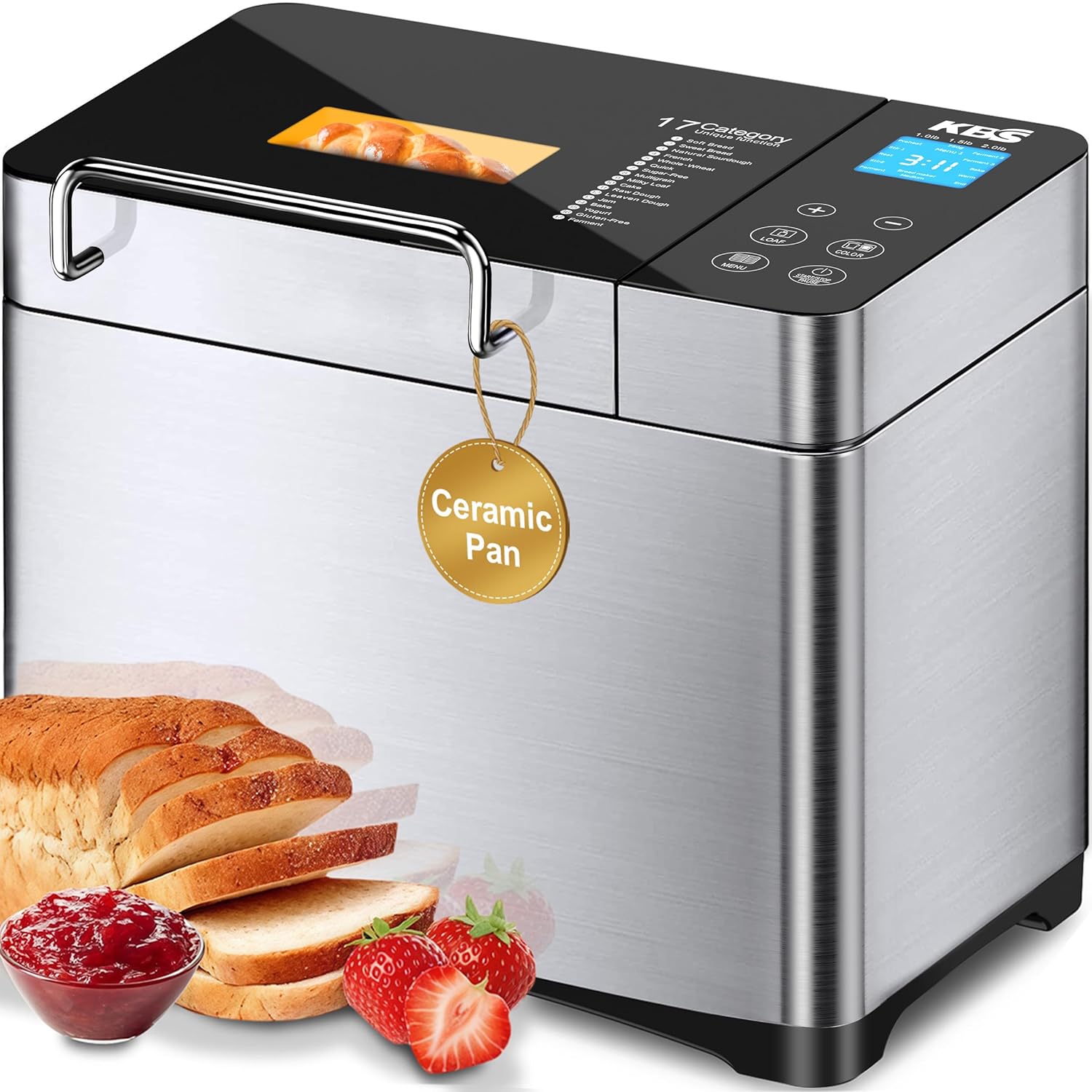
The ceramic coating on my pan is flaking. Is this safe, and what should I do?
Coating flaking is one of this machine's known durability problems, a real pattern rather than an isolated case. Stop using a pan once flaking appears rather than continuing, since flakes ending up in food are not worth the risk. Using only the supplied kneading paddle and removal hook rather than metal utensils, and avoiding abrasive scrubbing when cleaning, are the habits most likely to prevent it in the first place. If your pan is flaking within a reasonable window of purchase, pursue a replacement through the seller.
The instructions are confusing. Where can I find clearer guidance?
The instructions are genuinely hard to follow, so you are not alone. Start from the included 53-recipe book, which ties each recipe to a program, and search the model number, MBF-010, alongside the recipe or setting you are struggling with to find clearer help online.
Mine stopped working after only a few uses. Is that common?
It is a known complaint. Some machines break after limited use, and reliability varies from unit to unit. If a fault appears early, pursue it through the seller's returns process promptly rather than assuming nothing can be done; buying from a seller with a straightforward returns policy is the sensible precaution.
Does the automatic nut dispenser actually work reliably?
KBS says the dispenser releases mix-ins automatically at the right point in the cycle, removing the need to listen for a beep and add ingredients by hand partway through, which is a genuine convenience over machines that need manual mix-in addition. Performance and ease of use are among the machine's strengths, which suggests the automation generally works as described.
How does the gluten-free setting differ from the basic setting?
KBS gives gluten-free bread its own dedicated program among the 17 settings, separate from Basic. Generally, gluten-free bread machine settings use a different, typically longer and gentler mixing profile than standard bread, since gluten-free doughs lack the gluten structure that gives regular dough its elasticity and behave more like a thick batter than a kneadable dough.
Is it worth the price given the durability risk?
Value tracks reliability closely: a machine that runs well is worth it and can save money over shop-bought bread, while one that develops an early fault understandably is not. With bread quality, ease of use and easy cleaning all strong, the automation justifies the cost if your unit runs reliably; buying from a seller with easy returns is the sensible hedge against the durability problems.