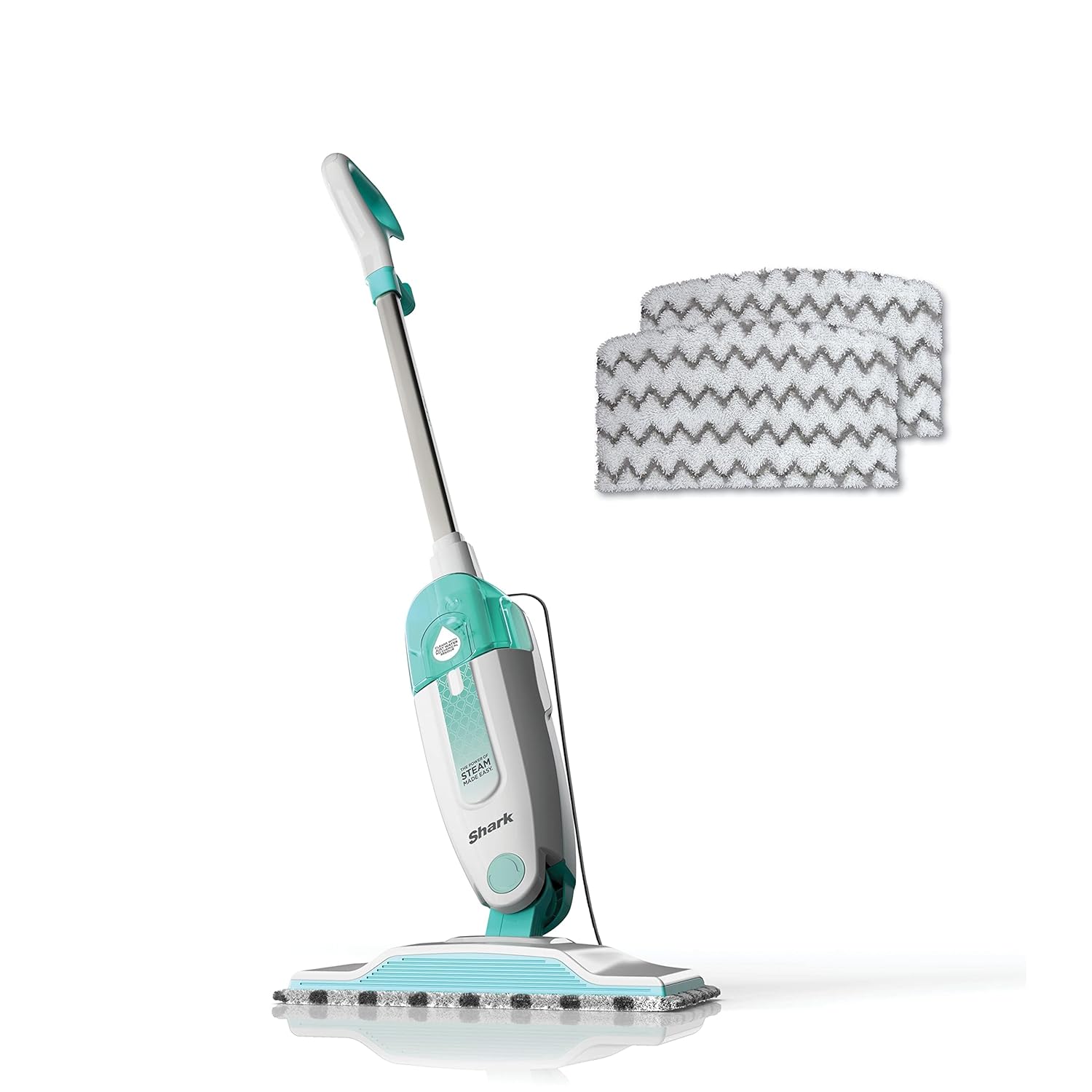
Can I use it on my wood or laminate floor?
Check your flooring maker's care guidance first, because many exclude steam cleaning, and using it can void their warranty as well as damage the floor. On sealed tile, sealed stone, vinyl and properly sealed laminate or hardwood, the sealant is a barrier and moisture sits on top of it long enough to lift dirt and then evaporates. On an unsealed floor, or one whose seal has worn through at the seams, in traffic lanes or around scratches, moisture reaches the material underneath. Wood absorbs it and swells, causing cupping at board edges that does not reverse, and laminate is worse, because its fibreboard core swells at the joints between planks, which is exactly where steam finds a way in.
The steam output has gotten weaker over time. Why?
Mineral build-up is a common cause in any steam appliance. The mop turns every drop of water into steam, so the dissolved minerals in hard tap water stay behind inside and can gradually narrow the internal channels. Using distilled or filtered water helps prevent it. Also check the basics: a pad that is saturated or clogged will feel like weak steam, and owners find a slow push and pull rhythm delivers more steam to the pad than quick strokes.
My pads stopped absorbing water properly. What happened?
Fabric softener is the most common cause. Softener coats the microfibre filaments and blocks the property that makes them work: the fine split fibres that give the fabric its huge surface area and let it absorb rather than smear. Wash the pads regularly without fabric softener, tumble dry low or air dry, and go easy on harsh chemicals. This is the most common way people unknowingly ruin the pads and then conclude the mop itself has stopped cleaning.
Does it actually disinfect the floor, or just clean it?
Mostly clean, with partial disinfection. Steam kills many household microorganisms, but that depends on how long the heat stays on a spot as well as how hot it is, and a mop head moving steadily across a floor heats any given spot only briefly. Shark itself qualifies its sanitisation claim with an asterisk. Move slowly, or pause deliberately on an area you are actually trying to sanitise, rather than assuming a normal pass has done it.
How often do I need to refill the tank?
Often, on a larger floor, since the 12.68 fluid ounce tank is a small reservoir for a device whose whole job is turning water into steam. The 30 second heat time makes the interruption quick, and the removable tank means you carry just the tank to the tap rather than the whole mop. Plan for a stop and refill rhythm on anything larger than a bathroom or a kitchen.
Is it heavy to carry between floors?
No. At 4.6 pounds it is genuinely light to push and to carry upstairs, and low weight is one of its standout strengths. The small tank is part of the same trade: a bigger reservoir would mean more weight in your hands for the whole session, so the smaller tank and lighter body go together rather than being separate design choices.